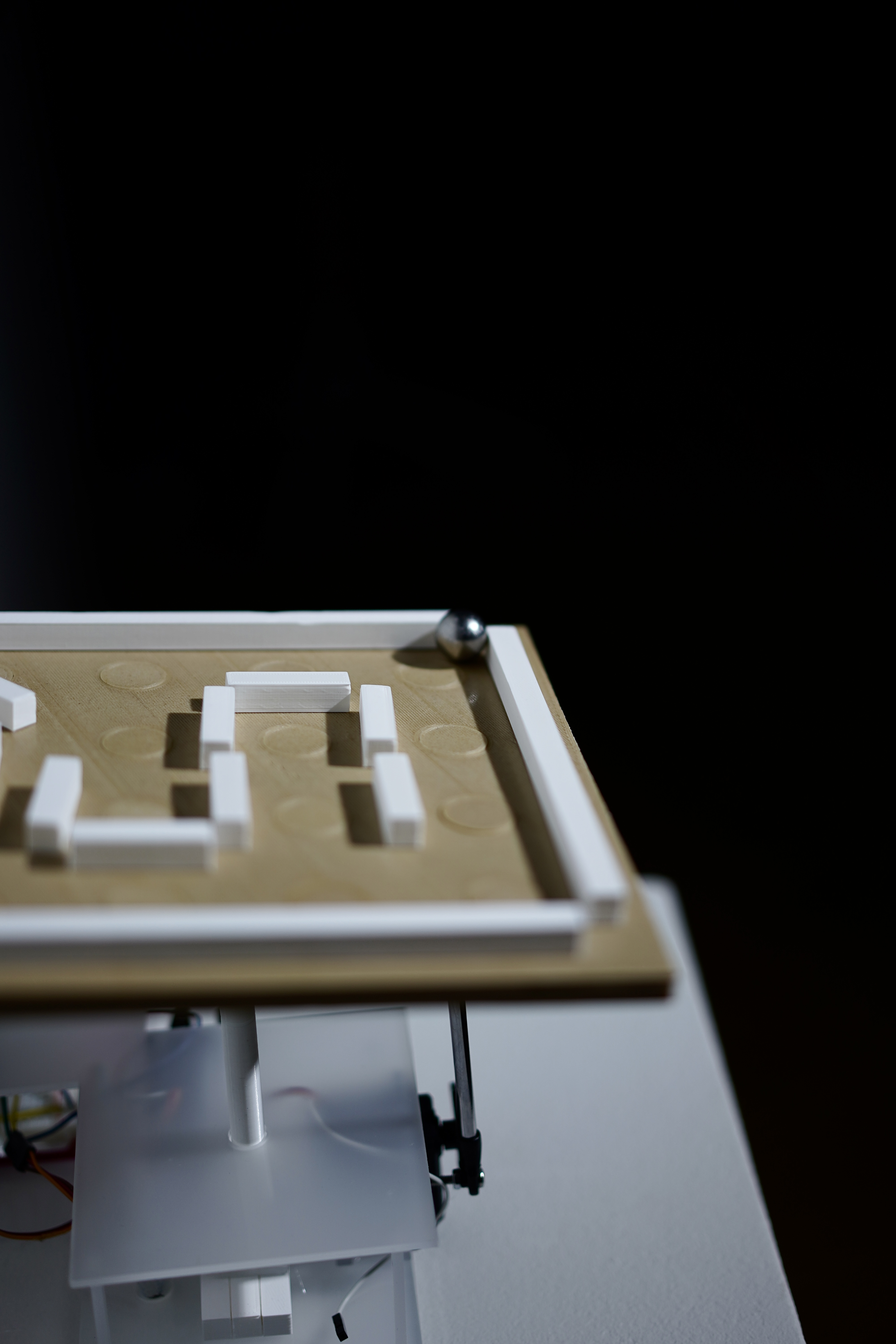
Minds-On
In Short
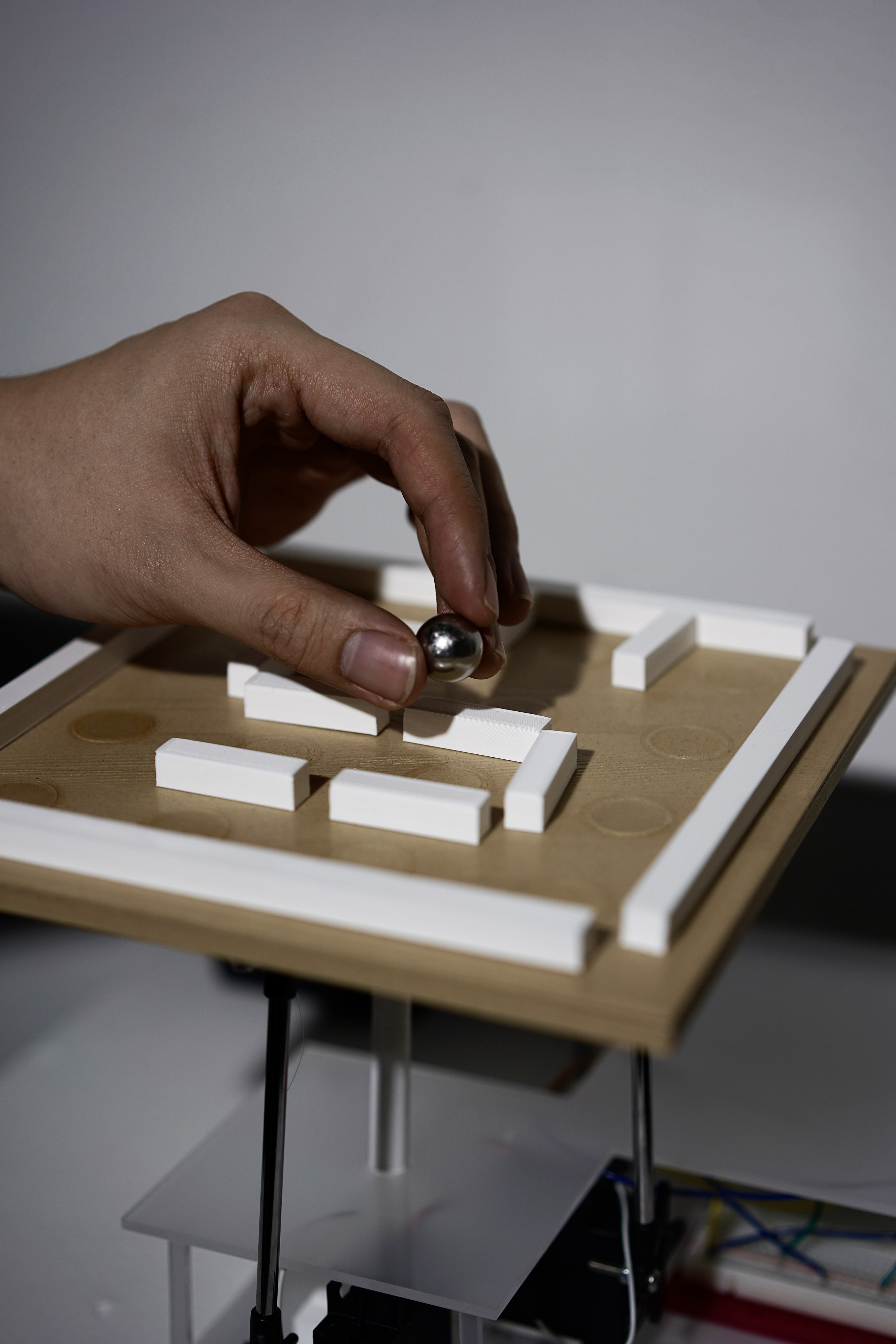
Minds-On came from the tilt board game (people have a board with holes and a ball on it, then they need to tilt the board to let the ball go through the maze). Usually, people play it with their hands. But in Minds-On, people can play it with their heads: when they nod or shake, they can tilt the board remotely. To make this installation sustainable, I designed both the maze and holes to be customizable.
Tech Stack
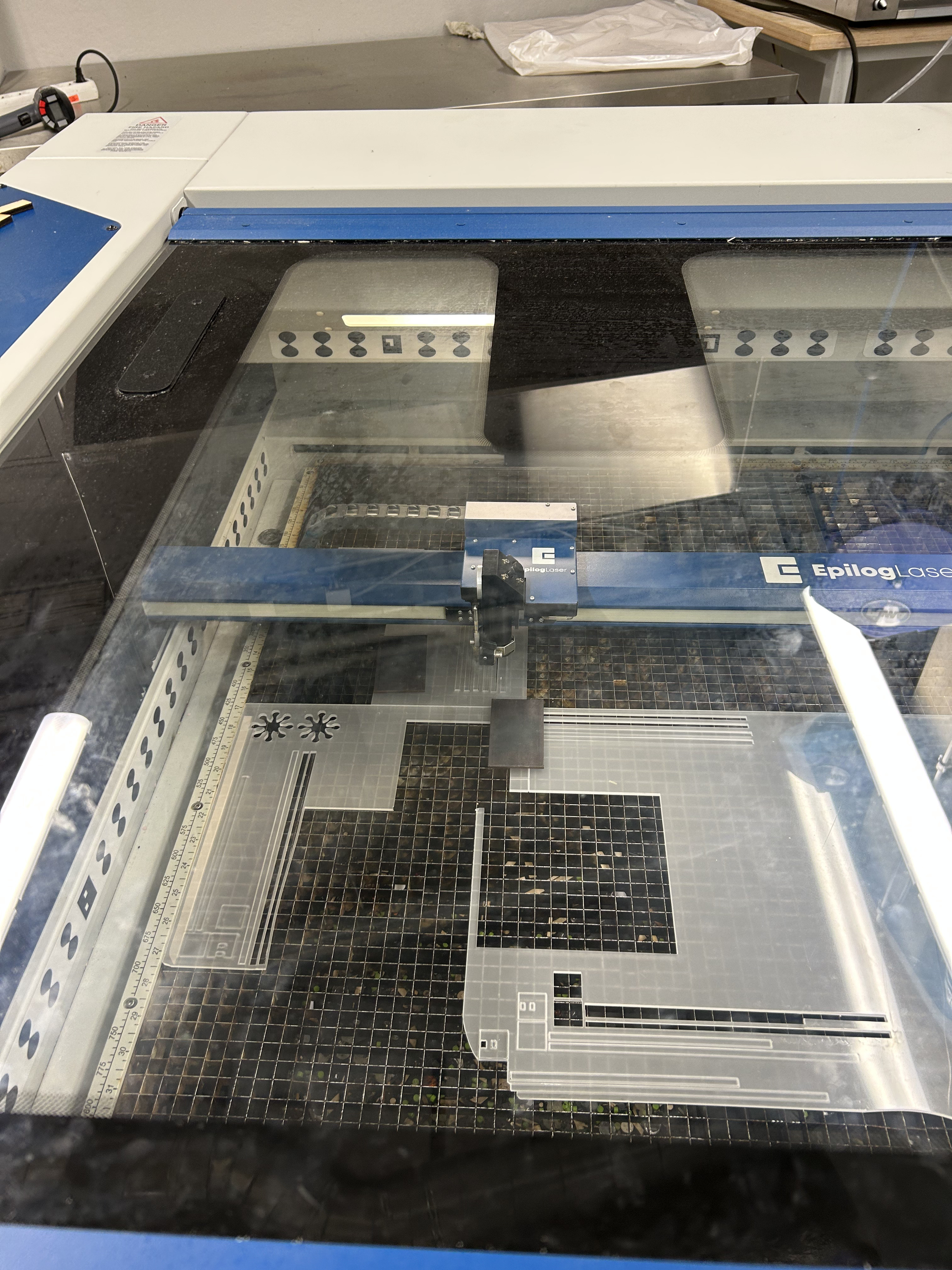
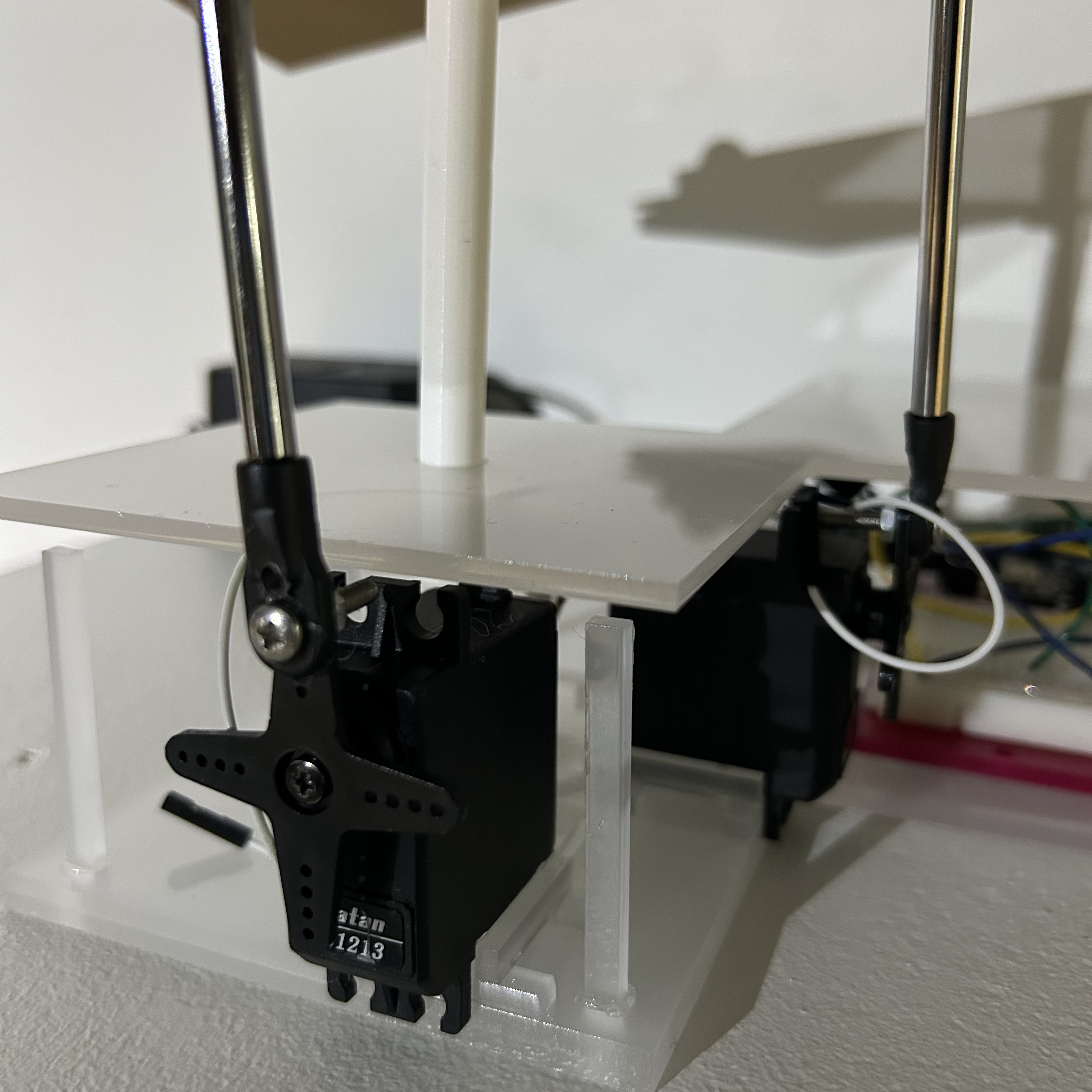
End-to-end implementation spanning Sensing & I/O (Arduino Nano, IMU), Wireless Transmission (Wi-Fi/OSC data packets), Actuation & Software (Arduino UNO R4, C++, servo control), and Physical Fabrication (3D printing, laser-cut acrylic, MDF assembly, and custom magnetic modular integration).
Modular & Magnetic Level Design
Transforming players from passive navigators into active level architects through a physical modular design. Embedded neodymium magnets in both the maze baseboard and boundary bricks enable effortless spatial reconfiguration while maintaining structural integrity during dynamic tilting.
Magnetic Grid Integration: Flush-mounted magnets embedded in precision-cut MDF boards ensure seamless snapping, tactile feedback, and structural stability under multi-axis actuation.
Customizable Hazards: Modular drop holes allow players to freely reposition trap locations, altering gameplay difficulty and path routing on the fly.
Final Look